Ne istersen sorFetvalarİslami AraştırmaKur'an TefsiriDergiler ve Mecmualar
The Islamic Global Reference

THE GRAND MUFTIS OF EGYPT · 1895 TO NOW

The lineage of Egypt's Grand Muftis

From the first Grand Mufti after the founding of Dar Al-Iftaa in 1895 to the sitting Mufti, and before them the Ottoman-era Hanafi Muftis of Egypt. Full biographies and each figure's notable works.

THE SITTING GRAND MUFTI

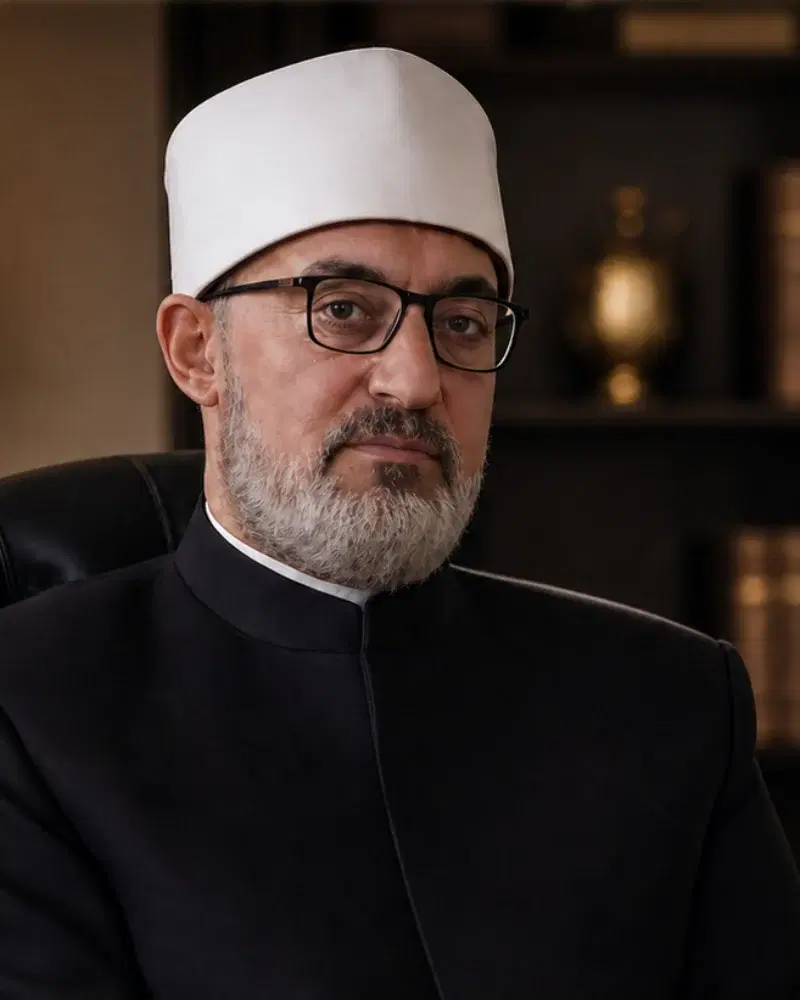
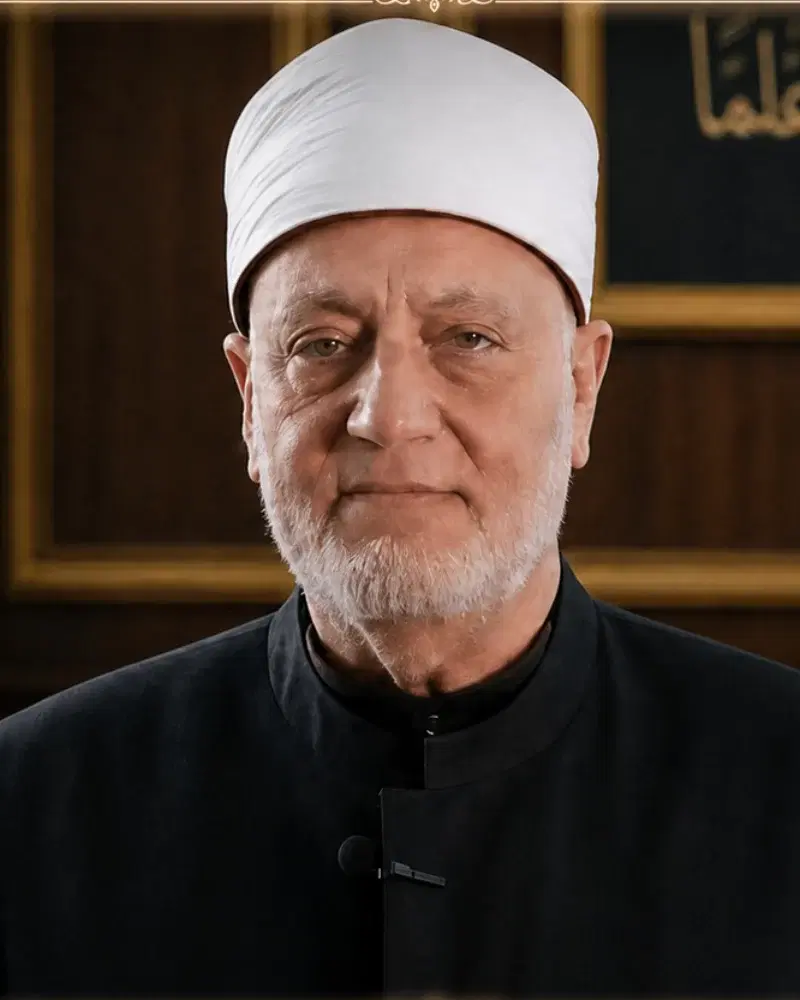
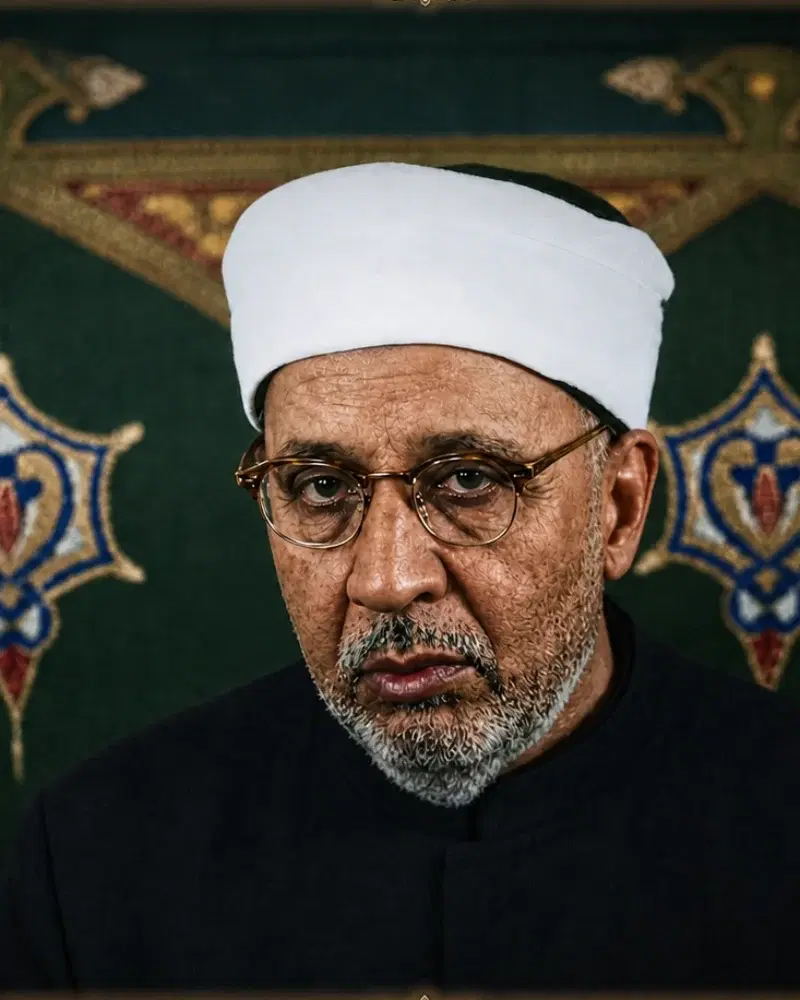
فضيلة الدكتور نظير محمد عيّاد

His Eminence Dr. Nazir Muhammad Ayyad

2024 – present

The twentieth Grand Mufti of Egypt, appointed on 11 August 2024. Born in Kafr al-Sheikh, he graduated from the Faculty of Theology (Usul al-Din) at Al-Azhar University and earned his doctorate in Islamic creed and philosophy with first-class honours, rising through the academic ranks to become a professor of creed and philosophy with deep expertise in kalam, comparative religion, and contemporary Islamic thought. Before taking up the office of Grand Mufti he served as Secretary-General of the Islamic Research Academy, where he helped discipline and institutionally renew religious discourse. He has authored more than thirty books and peer-reviewed studies on creed, moderation (wasatiyya), the correction of misconceptions, and the confrontation of intellectual extremism. His tenure is marked by harnessing modern technology and artificial intelligence in the service of disciplined fatwa and by consolidating Dar Al-Iftaa's global leadership in the digital sphere.

SERVICE RECORD — DAR AL-IFTAA

Period of service
2024/8/12 — present
Length of service
serving since 12 Aug 2024
Fatwas issued — official record
serving

NOTABLE WORKS & LEGACY

  • ▪Over thirty books and studies in creed, kalam, and contemporary Islamic thought
  • ▪Studies on moderation, correcting misconceptions, and countering intellectual extremism
Browse his fatwas
Nazir Muhammad Ayyad

The Dar Al-Iftaa era

1895 – present
19
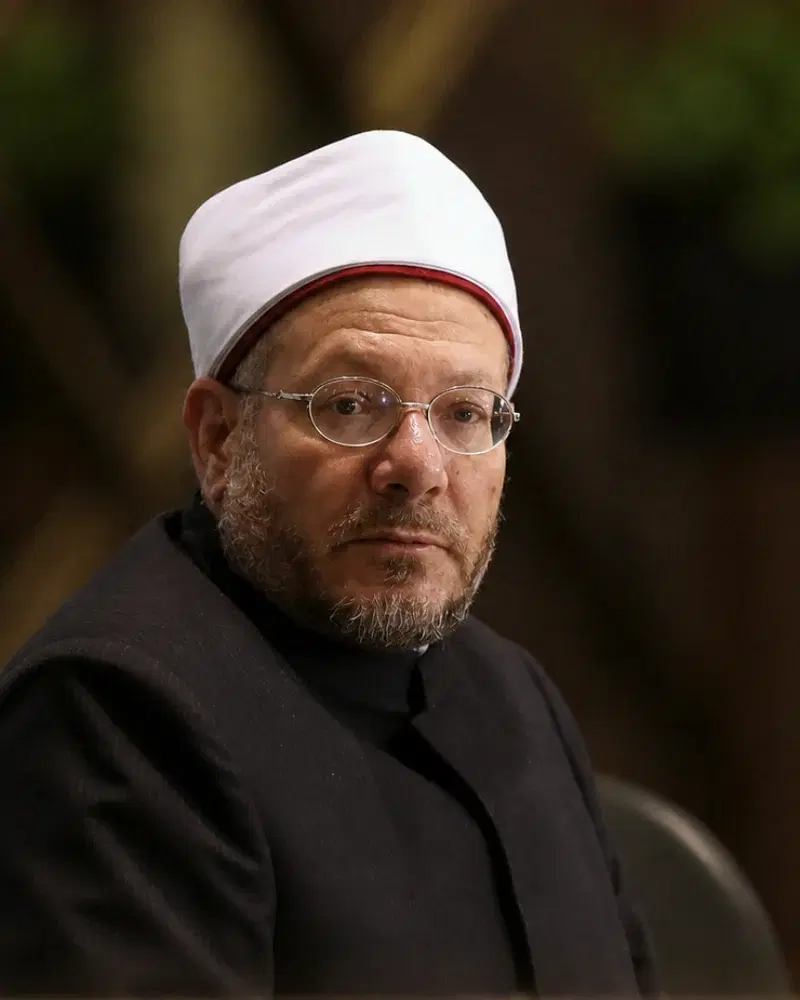
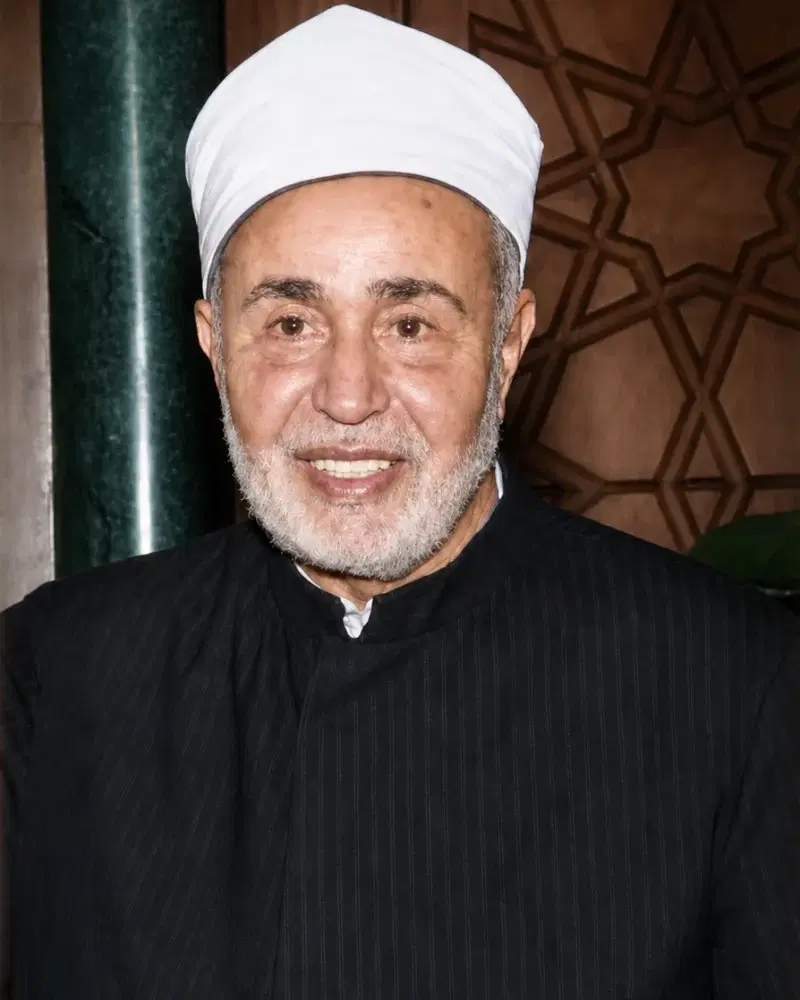
Shawki Ibrahim Abdel-Karim Allam

His Eminence Dr.

شوقي إبراهيم عبد الكريم عَلاَّم

Shawki Ibrahim Abdel-Karim Allam

February 2013 – August 2024

The nineteenth Grand Mufti of Egypt, born in the province of Beheira. He graduated from Al-Azhar's Faculty of Sharia and Law, earned his doctorate in comparative fiqh and its principles, and worked as a professor of comparative jurisprudence before becoming the first Grand Mufti to be chosen by election from the Council of Senior Scholars following the 2012 reform of the Al-Azhar law. His tenure of more than a decade was defined by leading an international campaign to dismantle the discourse of extremist groups and rebut their misleading fatwas, monitoring aberrant rulings through the observatory of takfiri fatwas and hardline opinions. In 2015 he founded the General Secretariat for Fatwa Authorities Worldwide to unify the work of the world's fatwa houses, and he greatly expanded Dar Al-Iftaa's digital infrastructure and mufti-training system, establishing the institution as a global reference for disciplined fatwa.

SERVICE RECORD — DAR AL-IFTAA

Period of service
2013/3/4 — 2024/8/11
Length of service
11 years, 5 months, 7 days
Fatwas issued — official record
13.100

NOTABLE WORKS & LEGACY

  • ▪Founded the General Secretariat for Fatwa Authorities Worldwide (2015)
  • ▪The observatory of takfiri fatwas and hardline opinions
  • ▪An international campaign rebutting extremist rulings
  • ▪The Dar's major digital expansion of fatwa services
View their fatwas in the archive
18
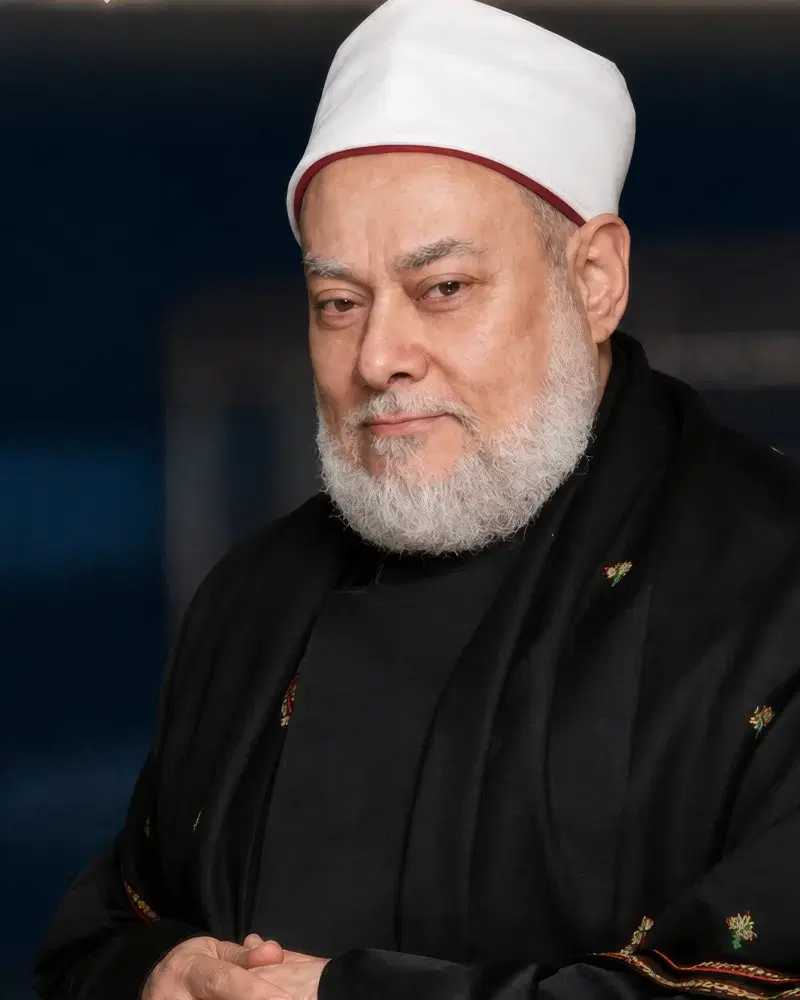
Ali Gomaa

His Eminence Dr.

علي جمعة محمد

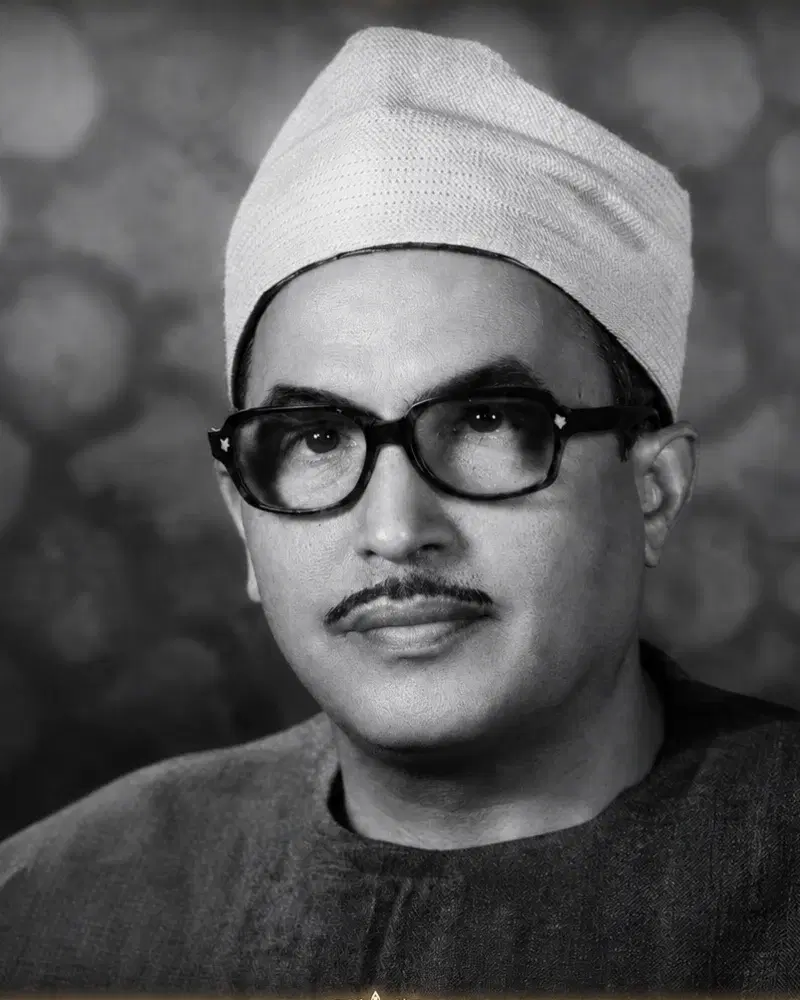
Ali Gomaa

September 2003 – February 2013

The eighteenth Grand Mufti of Egypt and one of the foremost jurists and scholars of the age. Born in Beni Suef in 1952, he studied commerce at Ain Shams University before turning to Al-Azhar, where he obtained the ʿalimiyya and then a doctorate in usul al-fiqh, becoming renowned for his mastery of the four Sunni schools and his depth in legal theory, hadith, and Shadhili Sufism. During his tenure he transformed Dar Al-Iftaa institutionally: he created a fatwa secretariat, introduced electronic and telephone fatwa services, and established a rigorous system for qualifying muftis and documenting rulings, raising the institution's output to tens of thousands of fatwas a year. He is a prolific author in fiqh, its principles, the Prophetic biography, and Islamic thought, a member of Al-Azhar's Council of Senior Scholars, and among the most active scholars in confronting extremism and articulating a centrist vision of Islam.

SERVICE RECORD — DAR AL-IFTAA

Period of service
2003/9/28 — 2013/3/3
Length of service
9 years, 5 months, 5 days
Fatwas issued — official record
19.670

NOTABLE WORKS & LEGACY

  • ▪al-Bayan (responding to pressing questions)
  • ▪The Extremists: their Method and Key Issues Discussed
  • ▪Our Master Muhammad, Messenger to the Worlds
  • ▪The Path to God
View their fatwas in the archive
17
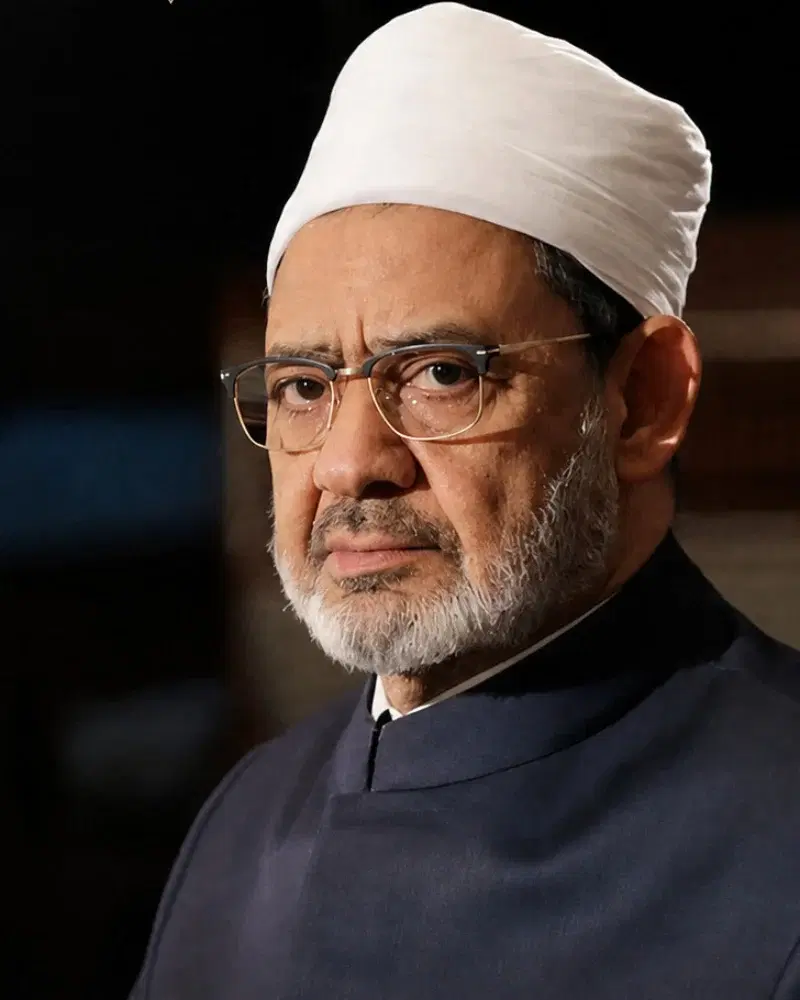
Ahmed Muhammad el-Tayeb

His Eminence Dr.

أحمد محمد الطيب

Ahmed Muhammad el-Tayeb

2002 – 2003

The seventeenth Grand Mufti of Egypt and one of the leading modern scholars of Islamic creed and philosophy. Born in Qurna, Luxor, in 1946 into a family of Sufi shaykhs, he specialised in Islamic philosophy and theology and was sent to France, where he earned his doctorate from the Sorbonne, later teaching at several Arab and foreign universities, including in Pakistan. He served as Grand Mufti for a single year (2002–2003), then became President of Al-Azhar University, and since 2010 has been the Grand Imam of Al-Azhar to this day. Known for his advocacy of moderation and of dialogue among religions and civilisations, he co-authored the Document on Human Fraternity and is among the most prominent global voices calling for coexistence and the confrontation of hate speech.

SERVICE RECORD — DAR AL-IFTAA

Period of service
2002/3/10 — 2003/9/27
Length of service
1 year, 6 months, 17 days
Fatwas issued — official record
2.784

NOTABLE WORKS & LEGACY

  • ▪The Document on Human Fraternity (2019)
  • ▪Grand Imam of Al-Azhar since 2010
  • ▪Writings and studies in Islamic philosophy and theology
View their fatwas in the archive
16
Nasr Farid Wasel

His Eminence Dr.

نصر فريد محمد واصل

Nasr Farid Wasel

1996 – 2002

The sixteenth Grand Mufti of Egypt, born in the village of Mit Badr Halawa in Gharbia. A graduate of Al-Azhar, he earned his doctorate in comparative fiqh and worked as a professor of comparative jurisprudence and dean of the Faculty of Sharia and Law before taking up the office of mufti. During his six-year tenure he issued more than 7,378 fatwas, with particular attention to the jurisprudence of contemporary financial transactions, questions of modern medicine, and newly arising cases (nawazil). He was known for his meticulous juristic method and for combining the authenticity of legal reasoning with a careful regard for the conditions of the age and the higher aims of the Sharia.

SERVICE RECORD — DAR AL-IFTAA

Period of service
1996/11/10 — 2002/3/9
Length of service
5 years, 3 months, 29 days
Fatwas issued — official record
7.982

NOTABLE WORKS & LEGACY

  • ▪More than 7,378 fatwas issued during his tenure
  • ▪Landmark rulings on contemporary financial transactions
  • ▪Landmark rulings on modern medical questions
View their fatwas in the archive
15
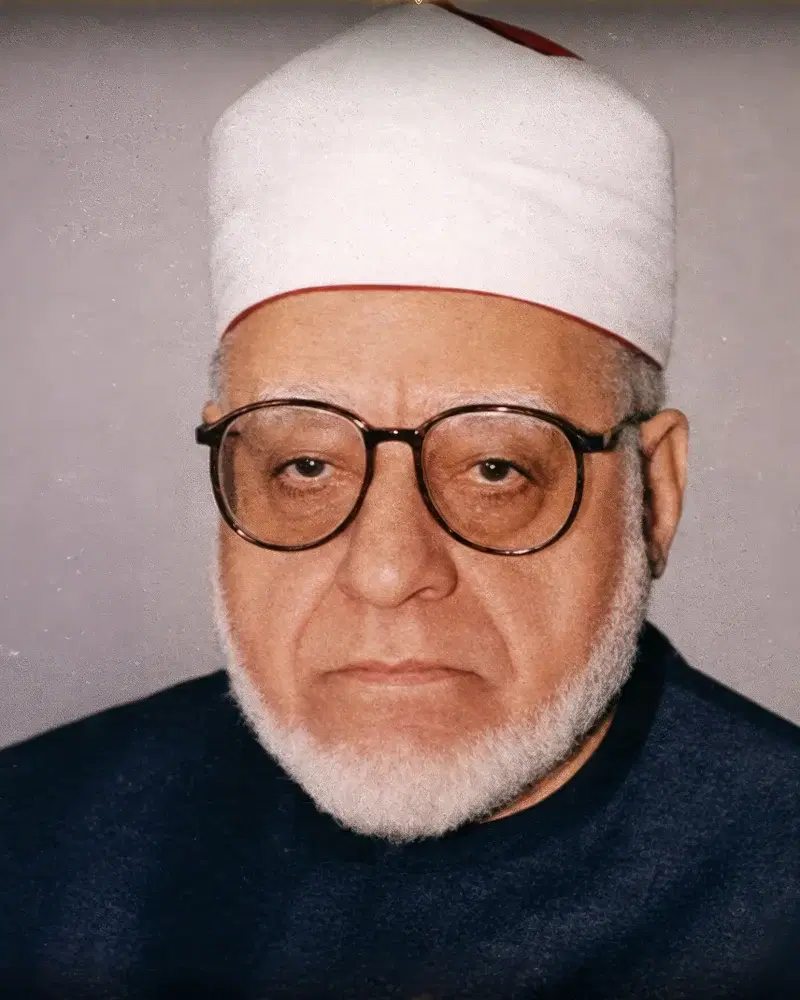
Muhammad Sayyid Tantawy

His Eminence Dr.

محمد سيد طنطاوي

Muhammad Sayyid Tantawy

1986 – 1996

The fifteenth Grand Mufti of Egypt and one of the foremost modern exegetes of the Quran. Born in the village of Selim in Sohag in 1928, he earned his doctorate in exegesis and hadith from Al-Azhar and taught at Egyptian universities as well as in Libya and Medina. He held the office of Grand Mufti for ten unbroken years (1986–1996), then was appointed Grand Imam of Al-Azhar until his death in 2010. His most celebrated work is al-Tafsir al-Wasit, a fifteen-volume commentary on the Quran and one of the most important modern exegeses. His fatwas were marked by scholarly boldness in contemporary questions, such as the rulings on banking transactions and organ transplantation, and by a concern to ease hardship and address the age from within Al-Azhar's centrist tradition.

SERVICE RECORD — DAR AL-IFTAA

Period of service
1986/10/26 — 1996/3/27
Length of service
9 years, 5 months, 1 day
Fatwas issued — official record
7.697

NOTABLE WORKS & LEGACY

  • ▪al-Tafsir al-Wasit (a fifteen-volume Quranic commentary)
  • ▪The Children of Israel in the Quran and Sunna
  • ▪Banking Transactions and their Sharia Rulings
  • ▪Narrative in the Holy Quran
View their fatwas in the archive
14
Abdul Latif Abdul Ghani Hamzah

His Eminence Dr.

عبد اللطيف عبد الغني حمزة

Abdul Latif Abdul Ghani Hamzah

1982 – 1985

The fourteenth Grand Mufti of Egypt, who held the office at the outset of the 1980s during a decisive phase in the reorganisation of Egypt's religious institutions and a growing role for Dar Al-Iftaa in addressing social and economic questions. His tenure focused on modernising the fatwa process, broadening the range of issues the institution considered, and consolidating the institutional traditions that bind the Dar's rulings to the scholarly authority of Al-Azhar.

SERVICE RECORD — DAR AL-IFTAA

Period of service
1982/2/1 — 1985/9/16
Length of service
3 years, 7 months, 13 days
Fatwas issued — official record
1.117

NOTABLE WORKS & LEGACY

  • ▪Modernised the Dar's fatwa procedures in the early 1980s
  • ▪Broadened the range of questions the Dar addressed
  • ▪His fatwas preserved in the Dar's registers and digital archive
View their fatwas in the archive
13
Jad al-Haqq Ali Jad al-Haqq

His Eminence Shaykh

جاد الحق علي جاد الحق

Jad al-Haqq Ali Jad al-Haqq

1978 – 1982

The thirteenth Grand Mufti of Egypt and among the greatest and most influential jurists of the twentieth century in shaping Egypt's religious establishment. Born in the village of Batra in Dakahlia in 1917, he rose through the Sharia judiciary before assuming the office of mufti (1978–1982). He was then appointed Minister of Awqaf and, in 1982, Grand Imam of Al-Azhar, a post he held until his death in 1996. His fatwas and studies were collected in the multi-volume Fatawa Islamiyya of Dar Al-Iftaa, a cornerstone reference for students and researchers. His discourse combined a firm grounding in Hanafi fiqh with a wide reading across the schools, and a steadfast defence of Al-Azhar's authority and the unity of the community against calls to extremism and division.

SERVICE RECORD — DAR AL-IFTAA

Period of service
1978/8/26 — 1982/1/3
Length of service
3 years, 4 months, 7 days
Fatwas issued — official record
1.282

NOTABLE WORKS & LEGACY

  • ▪Fatawa Islamiyya of Dar Al-Iftaa (multi-volume)
  • ▪Bayan li-l-Nas from Al-Azhar
  • ▪Islamic Jurisprudence: its Flexibility and Development
View their fatwas in the archive
12
Muhammad Khater Muhammad al-Shaykh

His Eminence Shaykh

محمد خاطر محمد الشيخ

Muhammad Khater Muhammad al-Shaykh

1970 – 1978

The twelfth Grand Mufti of Egypt, who led Dar Al-Iftaa throughout the 1970s, a decade of major transformation in Egyptian society following the October War of 1973 and the economic and social opening that came after it. He issued rulings on delicate questions concerning the relationship between the modern state and society and on emerging financial and social developments, keeping the fatwa disciplined by the sources while attentive to the higher aims of the Sharia and the conditions of the people.

SERVICE RECORD — DAR AL-IFTAA

Period of service
1970/10/24 — 1978/8
Length of service
7 years, 10 months, 4 days
Fatwas issued — official record
2.969

NOTABLE WORKS & LEGACY

  • ▪The 1970s rulings on the modern state and society
  • ▪Rulings on post-October-War financial and social developments
  • ▪His fatwas preserved in the Dar's registers and digital archive
View their fatwas in the archive
11
Ahmad Muhammad Abd al-Al Haridi

His Eminence Shaykh

أحمد محمد عبد العال هريدي

Ahmad Muhammad Abd al-Al Haridi

1964 – 1970

The eleventh Grand Mufti of Egypt, who held the office during the latter part of the Nasser era, a period of profound change in the structure of the state and society. He ruled on questions of land nationalisation, labour, family, and transactions that shaped the character of the modern Egyptian state, adhering to the Azhari method of tying newly arising cases to the foundations and rules of fiqh, and safeguarding the independence and objectivity of the fatwa.

SERVICE RECORD — DAR AL-IFTAA

Period of service
1960/6/26 — 1970/5/17
Length of service
9 years, 10 months, 20 days
Fatwas issued — official record
8.359

NOTABLE WORKS & LEGACY

  • ▪Rulings on nationalisation, labour, and family law in the Nasser era
  • ▪His fatwas preserved in the Dar's registers and digital archive
View their fatwas in the archive
10
Hasan Ma'mun

His Eminence Shaykh

حسن مأمون

Hasan Ma'mun

1955 – 1964

The tenth Grand Mufti of Egypt, born in Cairo's Khalifa district in 1894. He advanced through the Sharia judiciary to become Chief Judge of Sudan, then was appointed Grand Mufti of Egypt (1955–1964) and later Grand Imam of Al-Azhar (1964–1969). His imamate coincided with the 1961 law for the development of Al-Azhar, which reorganised the university and added its modern faculties. He authored works on the rulings of jihad and on Quranic jurisprudence and was known for soundness of judgement, breadth of vision, and a determination to preserve the standing of Al-Azhar and Dar Al-Iftaa during a politically delicate period.

SERVICE RECORD — DAR AL-IFTAA

Period of service
1955/3/1 — 1960/6/19
Length of service
5 years, 3 months, 21 days
Fatwas issued — official record
12.687

NOTABLE WORKS & LEGACY

  • ▪The Rulings of Jihad in Islam
  • ▪Studies in the rulings of the Quran
View their fatwas in the archive
8
Hasanayn Muhammad Makhluf (second term)

His Eminence Shaykh

حسنين محمد مخلوف (الفترة الثانية)

Hasanayn Muhammad Makhluf (second term)

1952 – 1954

His second term as Grand Mufti, to which he returned after the 23 July 1952 revolution during the transition from monarchy to republic. One of the great exegetes and jurists of the twentieth century, he was renowned for the clarity of his juristic language and the precision of his drafting, leaving a lasting mark on the Quranic sciences and on fatwa. His second term extended his firmly established method of disciplining the fatwa while easing matters for the people. (See the fuller biography under his first term, 1946–1950.)

SERVICE RECORD — DAR AL-IFTAA

Period of service
1946/1/30 — 1954/10
Length of service
6 years, 11 months, 7 days (two terms)
Fatwas issued — official record
8.566

Two terms: the first until 7 May 1950, the second from 26 Feb 1952

NOTABLE WORKS & LEGACY

  • ▪Safwat al-Bayan li-Maʿani al-Quran
  • ▪Kalimat al-Quran: Tafsir wa-Bayan
  • ▪Rulings in the period following the July 1952 revolution
View their fatwas in the archive
9
Allam Nassar

His Eminence Shaykh

علَّام نصَّار

Allam Nassar

1950 – 1952

The ninth Grand Mufti of Egypt, who held the office in the interval between Sheikh Hasanayn Makhluf's first and second terms. His tenure spanned a pivotal moment in Egypt's history, encompassing the final years of the monarchy and the July 1952 revolution. He managed the fatwa in sensitive matters of personal status, transactions, and emerging social questions, preserving the stability of the fatwa institution and the independence of its decisions amid turbulent political circumstances.

SERVICE RECORD — DAR AL-IFTAA

Period of service
1950/5/12 — 1952/2/23
Length of service
1 year, 9 months, 11 days
Fatwas issued — official record
2.191

NOTABLE WORKS & LEGACY

  • ▪Rulings through the transition from monarchy to republic
  • ▪His fatwas preserved in the Dar's registers and digital archive
View their fatwas in the archive
8
Hasanayn Muhammad Makhluf (first term)

His Eminence Shaykh

حسنين محمد مخلوف (الفترة الأولى)

Hasanayn Muhammad Makhluf (first term)

1946 – 1950

The eighth Grand Mufti of Egypt and one of the great modern exegetes and jurists. Born in Cairo in 1890 into a distinguished scholarly family, he graduated from Al-Azhar and rose through teaching, the judiciary, and the fatwa. He held the office of Grand Mufti in two terms (1946–1950 and again 1952–1954) and left many widely read works on the Quranic sciences, the most famous being Safwat al-Bayan li-Maʿani al-Qurʾan and Kalimat al-Qurʾan: Tafsir wa-Bayan, among the most circulated books explaining the meanings of the Quran. Long-lived in the service of knowledge, he died in 1990, and was known for a sober juristic method that balanced the foundations with reality and sought to bring the sciences of the Sharia within reach of ordinary Muslims.

SERVICE RECORD — DAR AL-IFTAA

Period of service
1946/1/30 — 1954/10
Length of service
6 years, 11 months, 7 days (two terms)
Fatwas issued — official record
8.566

Two terms: the first until 7 May 1950, the second from 26 Feb 1952

NOTABLE WORKS & LEGACY

  • ▪Safwat al-Bayan li-Maʿani al-Quran
  • ▪Kalimat al-Quran: Tafsir wa-Bayan
  • ▪Inheritance in Islamic Law
View their fatwas in the archive
7
Abd al-Majid Salim

His Eminence Shaykh

عبد المجيد سليم

Abd al-Majid Salim

1928 – 1946

The seventh Grand Mufti of Egypt and the longest-serving after the founding of the institution, holding the office for eighteen years (1928–1946). Born in the village of Mit Shahala in Menufia in 1882, he was a student of Imam Muhammad Abduh and was shaped by his method of renewal, purposive (maqasid) reasoning, and comparison of the schools, with an inclination toward Ibn Taymiyya's approach to verification. He issued thousands of fatwas counted among the most rigorous the institution has produced, and later held the Grand Imamate of Al-Azhar twice. He is regarded as one of the great renewers of fiqh in the first half of the twentieth century, uniting depth of learning, independence of opinion, and boldness in confronting newly arising questions.

SERVICE RECORD — DAR AL-IFTAA

Period of service
1928/5/22 — 1946/1 (أوائل)
Length of service
17 years, 7 months (approx.)
Fatwas issued — official record
15.774

NOTABLE WORKS & LEGACY

  • ▪The collected fatwas of Sheikh Abd al-Majid Salim
  • ▪Studies in comparative fiqh and personal-status questions
View their fatwas in the archive
6
'Abd al-Rahman Qurra'ah

His Eminence Shaykh

عبد الرحمن قراعة

'Abd al-Rahman Qurra'ah

1921 – 1928

The sixth Grand Mufti of Egypt, who led the fatwa through the 1920s following nominal independence from Britain and the promulgation of the 1923 constitution, a period in which the features of the modern national state and its legal institutions took shape. He ruled on questions of endowments (awqaf), personal status, and the rulings of vows and oaths, and his tenure was marked by attention to matters of women and the family, with a care to tie the fatwa to the adopted Hanafi school while heeding the changing conditions of society.

SERVICE RECORD — DAR AL-IFTAA

Period of service
1921/1/5 — 1928/2/5
Length of service
7 years, 1 month
Fatwas issued — official record
3.079

NOTABLE WORKS & LEGACY

  • ▪Works on the rulings of vows and oaths
  • ▪Landmark rulings on women's and family questions
  • ▪The 1920s rulings on endowments (awqaf)
View their fatwas in the archive
5
Muhammad Isma'il al-Bardisi

His Eminence Shaykh

محمد إسماعيل البرديسي

Muhammad Isma'il al-Bardisi

July 1920 – January 1921

The fifth Grand Mufti of Egypt, from the town of Girga in Sohag. He held the office for only a few months, between July 1920 and January 1921, during which he issued 206 fatwas entered in the institution's registers before leaving the post. Despite the brevity of his tenure, his rulings remain a testament to the continuity of the institution's orderly work and its precise documentation of everything it issued in that early era.

SERVICE RECORD — DAR AL-IFTAA

Period of service
1920/7/4 — 1921/1/2
Length of service
5 months, 28 days
Fatwas issued — official record
206

NOTABLE WORKS & LEGACY

  • ▪206 fatwas entered in the Dar's registers during his months in office
View their fatwas in the archive
4
Muhammad Bakhit al-Muti'i

His Eminence Shaykh

محمد بخيت المطيعي

Muhammad Bakhit al-Muti'i

1915 – 1920

The fourth Grand Mufti of Egypt and a luminary of Hanafi fiqh and legal theory at the turn of the twentieth century. Born in the village of al-Mutiʿa in Asyut, he graduated from Al-Azhar and excelled in fiqh, usul, logic, and theology. He held the office of mufti during the years of the First World War (1915–1920), issuing rulings on delicate wartime questions of conscription, the administration of endowments, and commerce. Renowned for his prolific authorship and his defence of the traditional Azhari authority against certain calls for Westernisation, he is remembered for his lengthy scholarly rebuttal of the book Islam and the Foundations of Governance. He is regarded as one of the most firmly grounded jurists of his age and among the widest-read in the opinions of the schools.

SERVICE RECORD — DAR AL-IFTAA

Period of service
1914/12/21 — 1920/7/1
Length of service
5 years, 6 months, 10 days
Fatwas issued — official record
2.030

NOTABLE WORKS & LEGACY

  • ▪Haqiqat al-Islam wa-Usul al-Hukm (rebuttal of Ali Abd al-Raziq)
  • ▪Irshad Ahl al-Milla ila Ithbat al-Ahilla
  • ▪Tanbih al-ʿUqul al-Insaniyya
  • ▪A gloss on al-Shamsiyya in logic
View their fatwas in the archive
3
Bakri al-Sadafi

His Eminence Shaykh

بكري الصدفي

Bakri al-Sadafi

1905 – 1914

The third Grand Mufti of Egypt, and the first to hold the office after the death of Imam Muhammad Abduh, from the town of Sadfa in Asyut. He held the office for nine continuous years (1905–1914), during which he issued 1,180 fatwas and established many of the procedural norms for recording rulings and ordering the institution's registers, the foundations of which are still in use today. His relatively long tenure represents a phase of institutional consolidation that entrenched the working traditions of the young institution.

SERVICE RECORD — DAR AL-IFTAA

Period of service
1905/11/4 — 1914/12/21
Length of service
9 years, 1 month, 17 days
Fatwas issued — official record
1.163

NOTABLE WORKS & LEGACY

  • ▪1,180 fatwas across nine years in office
  • ▪Established the procedural norms for recording fatwas still in use today
View their fatwas in the archive
Abd al-Qadir al-Rafi'i

His Eminence Shaykh

عبد القادر الرافعي

Abd al-Qadir al-Rafi'i

November 1905

Appointed Grand Mufti of Egypt in November 1905 as successor to Imam Muhammad Abduh, he died only a few days after taking up the post following a heart attack, making his the shortest tenure in the history of Dar Al-Iftaa. His name remains recorded in the line of Egypt's Grand Muftis, a witness to the succession of eminent scholars to this high office since its founding.

SERVICE RECORD — DAR AL-IFTAA

Period of service
1905/11 — 1905/11
Length of service
a few days
Fatwas issued — official record
0

Died a few days after taking office, before issuing any fatwas.

NOTABLE WORKS & LEGACY

  • ▪Succeeded Imam Muhammad Abduh in the office of Grand Mufti (November 1905)
  • ▪The shortest tenure in Dar Al-Iftaa's history
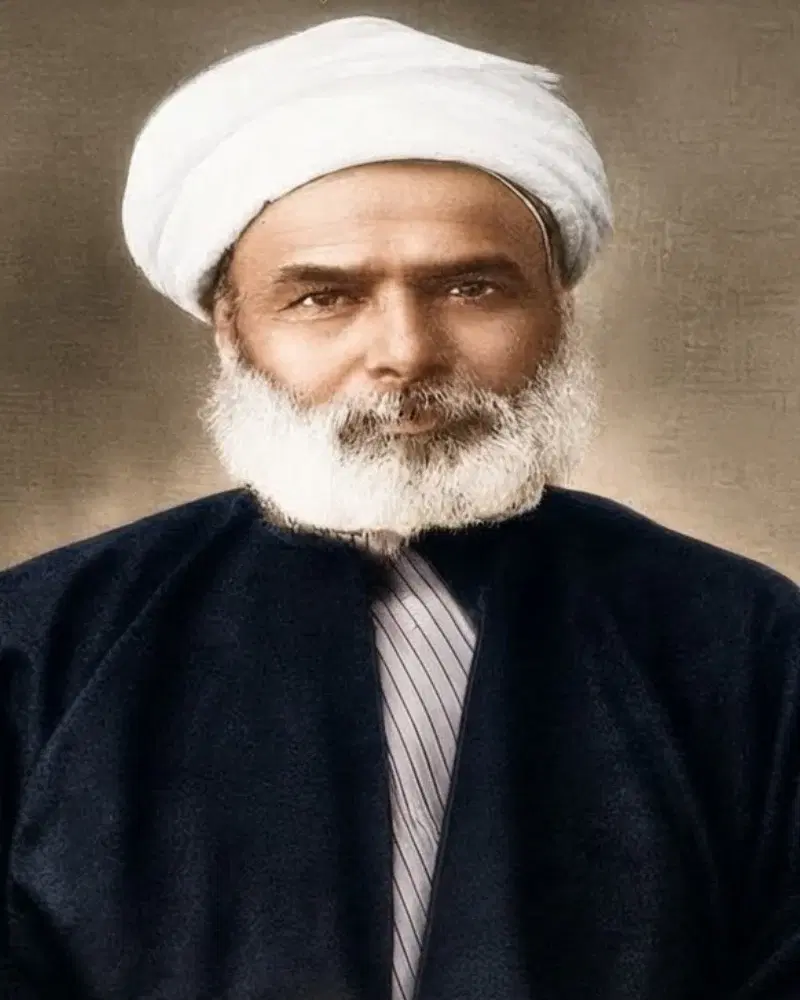
2
Muhammad Abduh

Imam

محمد عبده

Muhammad Abduh

1899 – 1905

One of the greatest figures of modern Islamic reform and renewal, and the first independent Grand Mufti of Egypt after the office was separated from the Grand Imamate of Al-Azhar. Born in the village of Mahallat Nasr in Gharbia in 1849, he was a disciple of Sayyid Jamal al-Din al-Afghani, from whom he imbibed the spirit of revival and the call to ijtihad. He took part in the national movement and was exiled after the Urabi revolt, living in Beirut and Paris, where he published the journal al-ʿUrwa al-Wuthqa with al-Afghani. Returning to Egypt, he served in the judiciary and then as Grand Mufti (1899–1905), leading a wide-ranging project to reform Al-Azhar, the Sharia courts, and the endowments. Among his enduring works are Risalat al-Tawhid and Tafsir al-Manar, completed by his student Rashid Rida, along with his famous Transvaal fatwa. He established a method of reconciling Islam with the demands of the age that shaped Islamic thought throughout the twentieth century. He died in Alexandria in 1905.

SERVICE RECORD — DAR AL-IFTAA

Period of service
1899/6/3 — 1905/7/11
Length of service
6 years, 1 month, 8 days
Fatwas issued — official record
945

NOTABLE WORKS & LEGACY

  • ▪Risalat al-Tawhid (The Theology of Unity)
  • ▪Tafsir al-Manar (with Rashid Rida)
  • ▪Islam and Christianity between Science and Civilisation
  • ▪The al-ʿUrwa al-Wuthqa journal (with al-Afghani)
View their fatwas in the archive
1
Hassuna al-Nawawi

His Eminence Shaykh

حسونة النواوي

Hassuna al-Nawawi

1895 – 1899

The first Grand Mufti of Egypt after the founding of Dar Al-Iftaa on 12 November 1895 by decree of Khedive Abbas Helmi II, and a native of the village of Nawa in Asyut. He combined the fatwa with the Grand Imamate of Al-Azhar and was among the great Hanafi jurists of his time. During his tenure he issued 287 fatwas, and the very first entry in the institution's first register was in his hand, an inheritance claim by lineage in 1895, making him the founder of the documentary tradition that has continued for more than a century and thirty years. His tenure marks the birth of the institution that would become the foremost fatwa authority in Egypt and the Islamic world.

SERVICE RECORD — DAR AL-IFTAA

Period of service
1895/11/21 — 1899/6/3
Length of service
3 years, 6 months, 12 days
Fatwas issued — official record
288

NOTABLE WORKS & LEGACY

  • ▪The first entry in the Dar's first register (1895), in his own hand
  • ▪287 fatwas during his tenure
  • ▪Combined the fatwa office with the Grand Imamate of Al-Azhar
View their fatwas in the archive

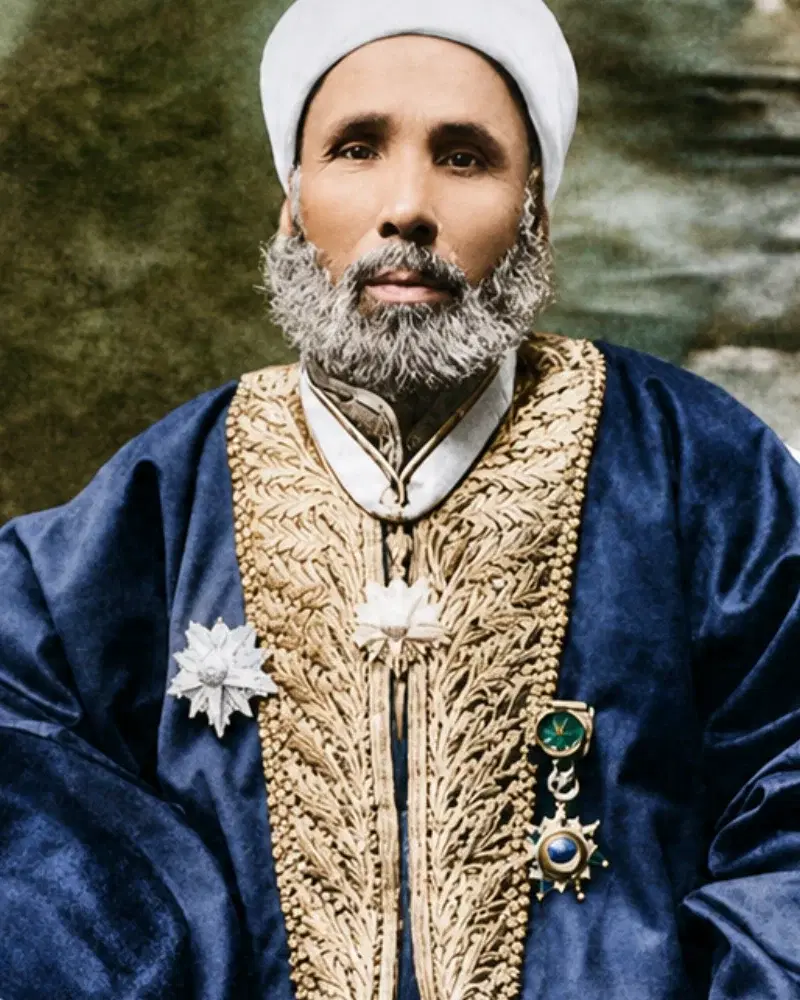
The Ottoman-era Hanafi Muftis

before 1895
5
Muhammad al-Mahdi al-Abbasi

His Eminence Shaykh

محمد المهدي العبَّاسي

Muhammad al-Mahdi al-Abbasi

c. 1847 – 1887

One of the most prominent jurists of nineteenth-century Egypt and the longest-serving Hanafi Mufti of the Egyptian Provinces, holding the office for roughly four decades under the khedives Muhammad Saʿid, Ismaʿil, and Tawfiq, and occupying the Grand Imamate of Al-Azhar more than once. His rulings were gathered in his major encyclopaedia al-Fatawa al-Mahdiyya fi al-Waqaʾiʿ al-Misriyya across several volumes, one of the most important sources of applied Hanafi fiqh in modern Egypt, revealing the precision of his reasoning and his comprehensive grasp of people's circumstances and cases. His long tenure formed a bridge between the traditions of Ottoman fatwa and the modern institution that would later crystallise in Dar Al-Iftaa in 1895.

NOTABLE WORKS & LEGACY

  • ▪al-Fatawa al-Mahdiyya fi al-Waqaʾiʿ al-Misriyya (seven volumes)
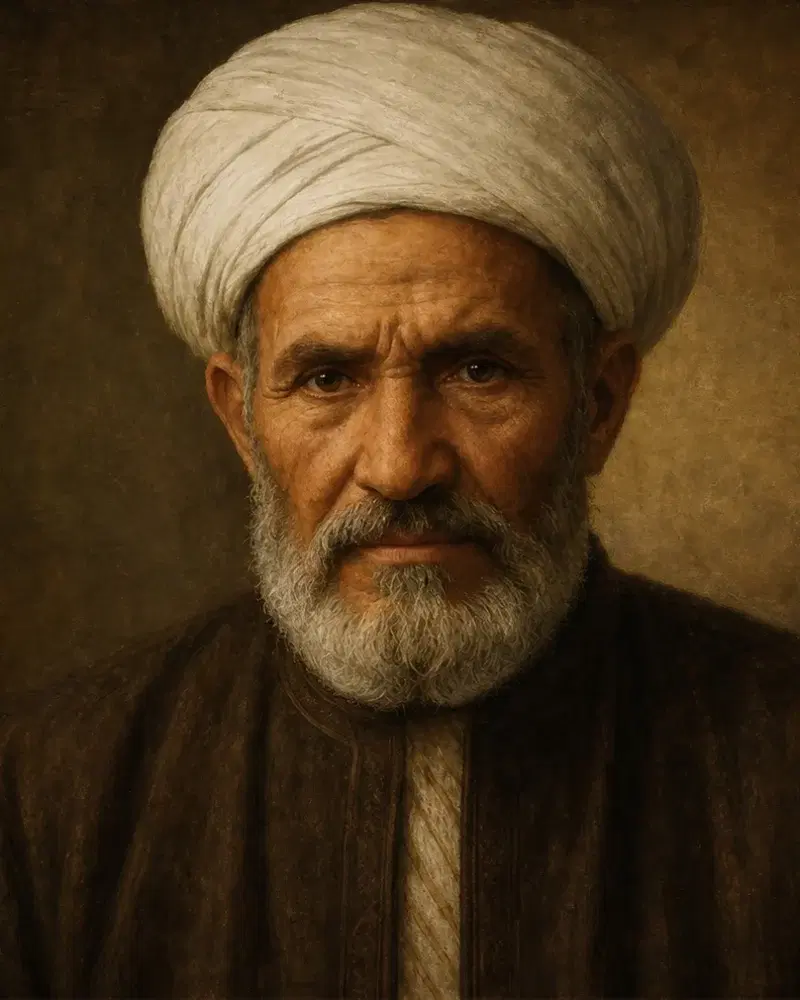
4
م

His Eminence Shaykh

محمد الإنبابي

Muhammad al-Inbabi

19th century

A leading scholar of nineteenth-century Egypt who served as Mufti according to the Hanafi school before the office of mufti was unified in its modern institutional form, and who later held the Grand Imamate of Al-Azhar. Known for his firm grounding in fiqh and its principles and for his scholarly standing among the learned of his age, he was among the figures who preserved the continuity of the Azhari tradition in teaching and fatwa during a period of profound change in Egypt's history.

NOTABLE WORKS & LEGACY

  • ▪Held the Hanafi fatwa office before its unification
  • ▪The Grand Imamate of Al-Azhar
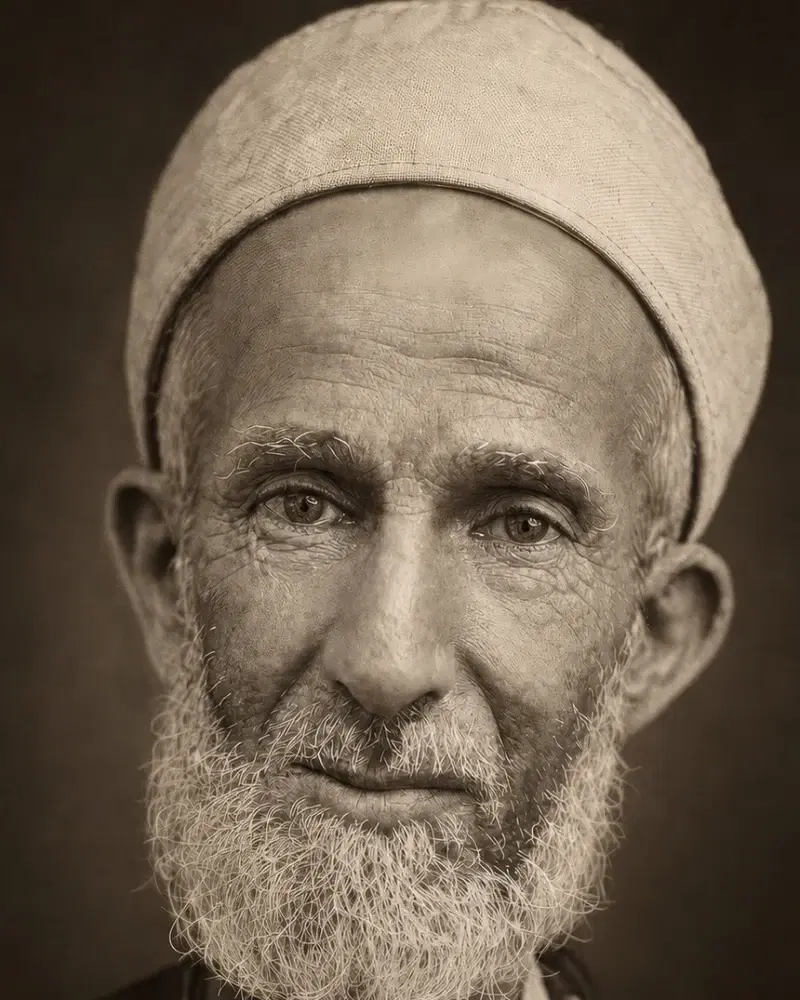
3
إ

His Eminence Shaykh

إبراهيم الباجوري

Ibrahim al-Bajouri

1784 – 1860

One of Egypt's great luminaries in the nineteenth century and among the most famous Grand Imams of Al-Azhar, holding its imamate under Muhammad Ali Pasha and his successors, and an authoritative reference for fatwa before Dar Al-Iftaa was established. He was renowned for his works, primers, and study glosses that became mainstays of Azhari teaching, the most famous being Hashiyat al-Bajouri on Ibn Qasim al-Ghazzi's commentary in Shafiʿi fiqh, and his gloss on Jawharat al-Tawhid. Generations of students throughout the Islamic world were trained on his books, which remain references in fiqh and creed to this day.

NOTABLE WORKS & LEGACY

  • ▪Hashiyat al-Bajouri on Ibn Qasim al-Ghazzi's commentary (Shafiʿi fiqh)
  • ▪Tuhfat al-Murid on Jawharat al-Tawhid
  • ▪A gloss on al-Sullam al-Munawraq in logic
  • ▪A gloss on the Sanusiyya in creed
2
ح

His Eminence Shaykh

حسن العطَّار

Hasan al-Attar

1766 – 1835

Grand Imam of Al-Azhar under Muhammad Ali Pasha and a rare encyclopaedic scholar who combined fiqh, legal theory, hadith, language, literature, medicine, astronomy, and mathematics, making him among the most broadly learned of his age. He lived through the French Expedition to Egypt and, in contact with its savants, opened to the modern sciences and called for renewing the methods of instruction at Al-Azhar. He held the Grand Imamate of Al-Azhar (c. 1830–1835), contributed to Egypt's scholarly awakening, oversaw the editing of the gazette al-Waqaʾiʿ al-Misriyya, and was the teacher of Rifaʿa al-Tahtawi, the pioneer of the nahda. He is rightly regarded as one of the fathers of the modern Egyptian scholarly renaissance and a bridge between tradition and modernity.

NOTABLE WORKS & LEGACY

  • ▪A gloss on the Azhariyya in Arabic grammar
  • ▪A gloss on Jamʿ al-Jawamiʿ in legal theory
  • ▪A didactic poem and treatises on medicine
  • ▪al-Inshaʾ (on literary composition and correspondence)
1
م

His Eminence Shaykh

محمد العروسي

Muhammad al-Arousi

Late 18th / early 19th century

A leading scholar of Egypt at the turn of the eighteenth and nineteenth centuries, he held the Grand Imamate of Al-Azhar during a deeply turbulent period that witnessed the French Expedition to Egypt and the subsequent rise of Muhammad Ali Pasha. He represented the scholars in their negotiations with the French occupying authorities in defence of the country's people, and later in their dealings with the new rule, standing among the men of Al-Azhar who preserved the standing of the scholarly institution and its role as a reference in fatwa and instruction during a decisive turning point in modern Egyptian history.

NOTABLE WORKS & LEGACY

  • ▪Represented the ulama in negotiations during the French occupation
  • ▪The Grand Imamate of Al-Azhar at a historic turning point